Marketing of the Future: Multi-Agent Systems
Multi-agent systems as the key to greater agility, efficiency, and quality
Dear Leaders Community,
We’ve once again chosen an exciting topic to explore the potential of GenAI from a new perspective: What if, instead of a single agent, an entire team of specialized AI agents worked together—just like a real team of experts?
This is exactly the idea we explored in our Leaders Lab in collaboration with Virtual Identity and EY. Our goal: to develop a functional multi-agent system capable of solving complex tasks together—collaboratively, efficiently, and with a human-centered approach.
What initially sounded like science fiction turned into a real-world testing ground. We wanted to find out:
- How well do specialized agents work as a team?
- What do they need to coordinate effectively?
- And how does this change the way we use AI?
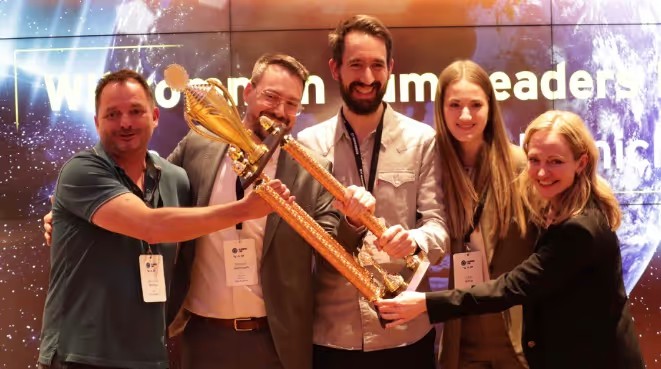
Four teams competed to see just how far they could go with networked AI agents. The participants included experts from Microsoft, Capco, Scorprise AI, and ThynkAI, as well as representatives from major companies such as EON, SPAR, and Lufthansa.
The results were astonishing. Multi-agent systems offer tremendous flexibility, enable more personalized communication, and boost efficiency, but they also demonstrate that ethics, transparency, and accountability remain essential.
Our teams built prototypes that demonstrate how collaboration between AI agents can work in practice:
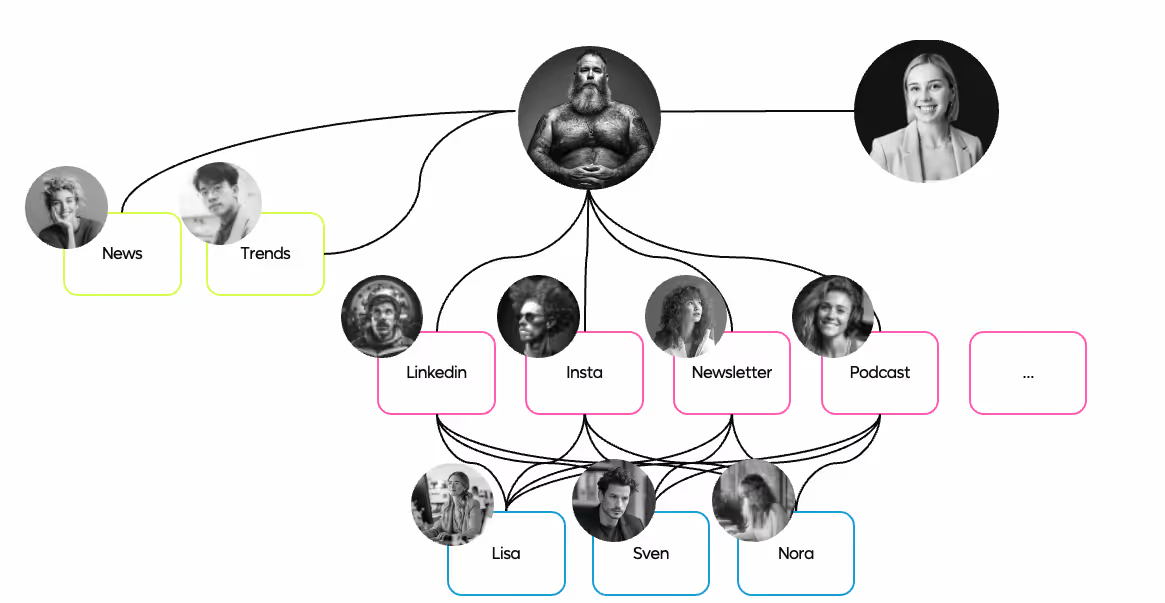
- Agent Architects rely on synthetic personas that learn from social media interactions—enabling them to target audiences with increasing precision.
- Bot Buddies integrates specialized AI agents for competitive and trend analysis—including a visual AI designer. The result: a well-thought-out, seamless content strategy.
- Data Divers impressed with their AI-powered community management, which uses sentiment analysis to determine when and how to respond to comments—bringing a new level of depth to engagement.
- Node Ninjas made content creation on the go possible via Telegram. Whether it's text, images, or podcasts—creating content on the go has never been easier.
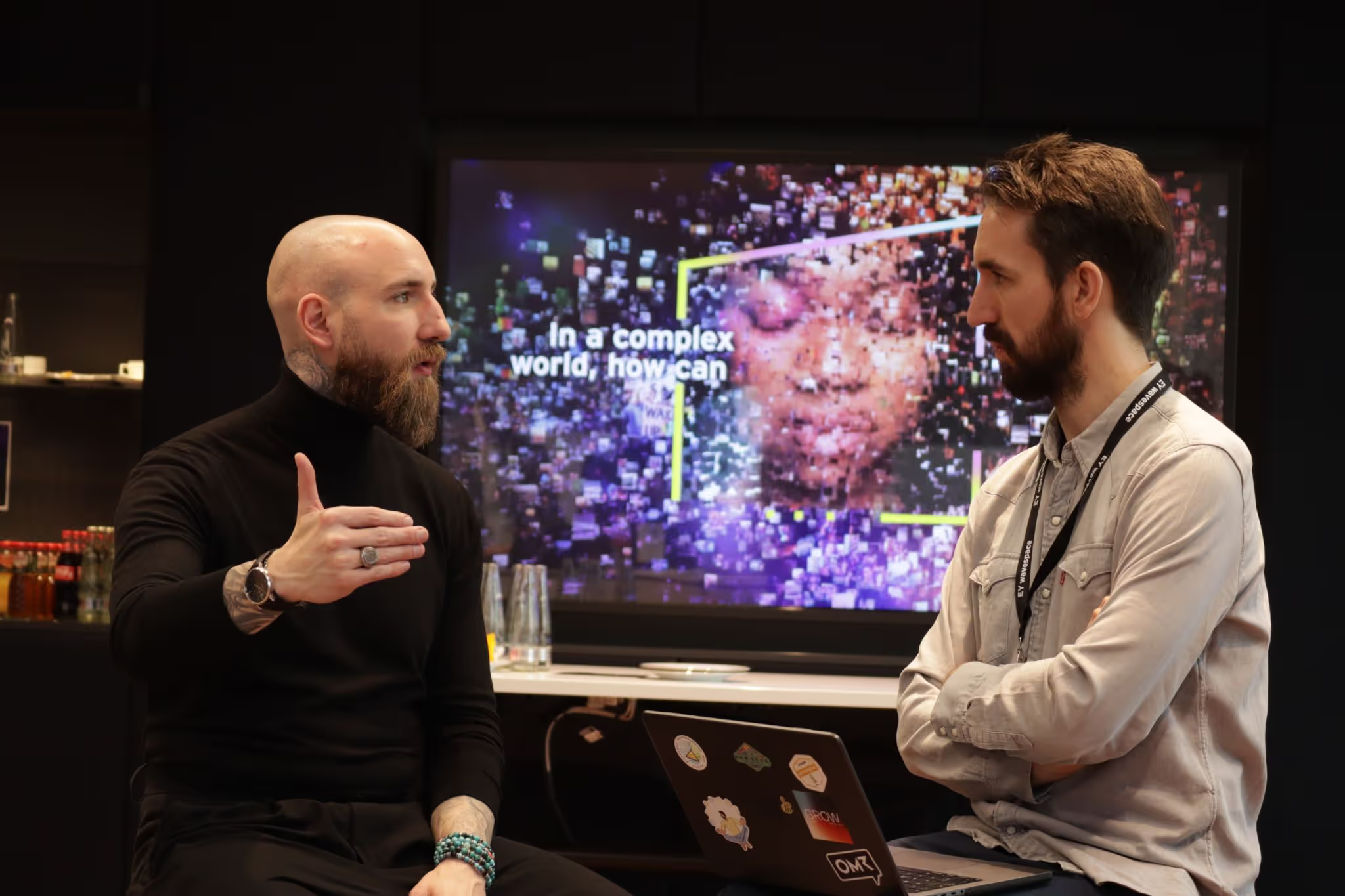
What was particularly interesting: The teams experimented with explicit communication mechanisms between the agents—just as people negotiate strategies in meetings.
The results show that coordination, contextual understanding, and clarity of purpose are just as important as technical excellence.
The bottom line? Multi-agent systems are no longer a distant dream; they are a promising blueprint for the next stage in the evolution of generative AI. Not as a replacement for humans, but as a new form of intelligent collaboration.
We have summarized all our insights, challenges, and best practices in a concise white paper.
A must-read for anyone who not only wants to understand AI but also wants to use it strategically.
Enjoy reading!
Hansi