
AI assistants aren't just the next big thing. They're organizational design.

The problem: Why the debate is escalating right now
If you feel like a new wave of AI hype washes over LinkedIn every month, you're not alone.
At first, it was prompting, prompt libraries, and the ultimate insider tips on prompting that were supposed to fundamentally change the AI game. A few months later, it became clear: prompting is a dead end. It doesn’t bring about real change in a company.
That’s why Agentic AI feels like déjà vu to many people. Everything revolves around agents. But will this be outdated again in a few weeks? Are agents already being replaced by copilots? The skepticism is understandable.
Gartner even puts a number on the problem: Over 40 percent of agentic AI projects will be abandoned by the end of 2027. They base these predictions on patterns they see time and again in companies: pilot projects without clear goals, without governance, and without assigned responsibilities. The result is rarely a technical failure. It is an organizational one. No one feels accountable. No one trusts the output. And in the end, the new tools slow down existing workflows, and everything goes back to the way it was.
That's not a technological problem. It's an organizational problem.
In a nutshell: What is an agent, assistant, or copilot?
These terms are being thrown around a lot right now. Here’s our take:
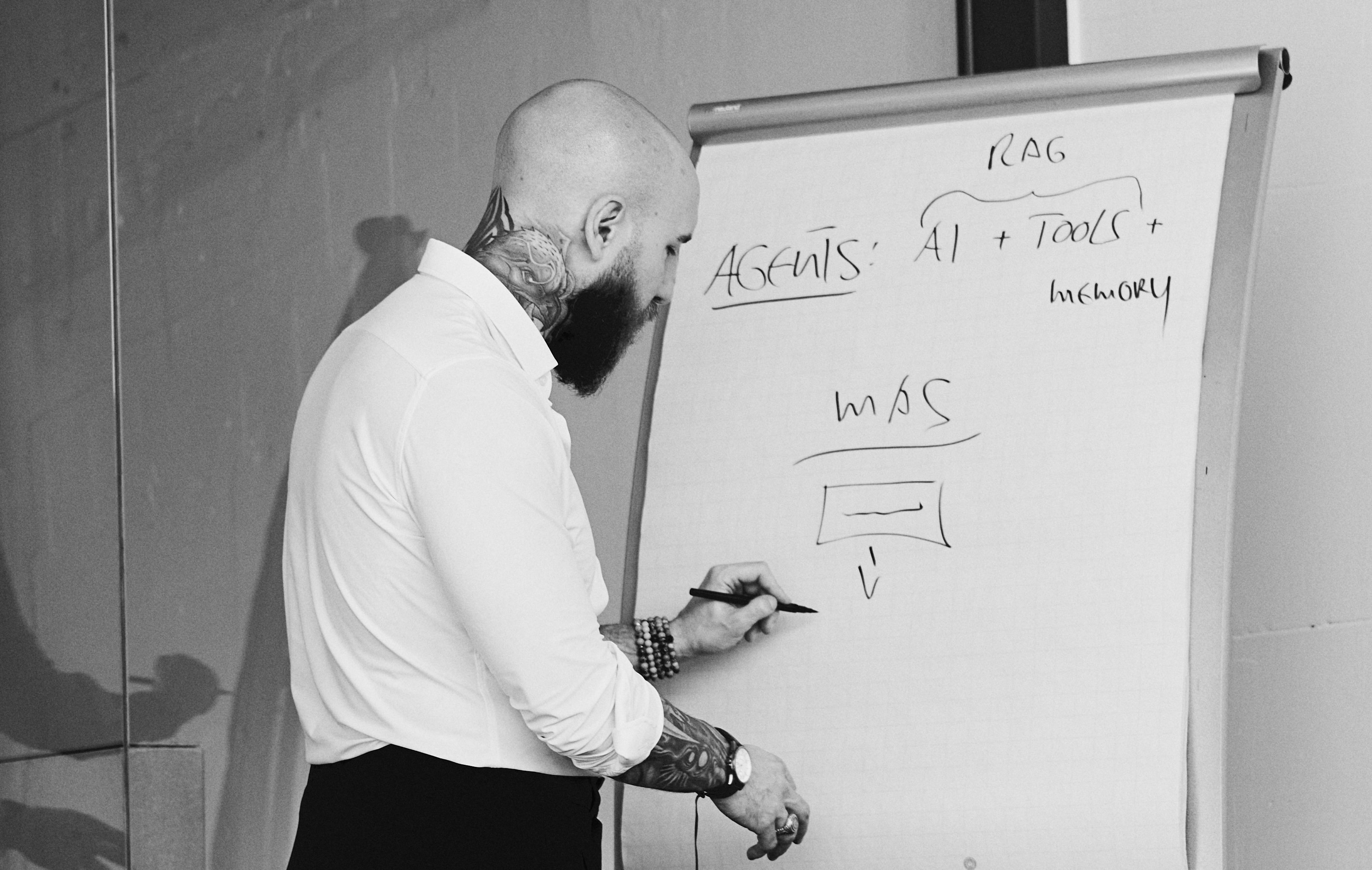
AI Assistant: Responds to requests. Think of it as a simple custom GPT that drafts emails or social media posts for you—no tool integrations required.
AI Agent: Operates outside its own tool environment. An agent can edit a Google Sheet, create a CRM ticket, or make an API call. Such a system can also operate autonomously if configured accordingly.
Copilot: An assistant or agent that is directly embedded in a tool or system and can therefore operate the associated functions and tools with particular precision, such as Microsoft Copilot or Claude Cowork.
From our perspective, the question isn't what you call it. The question is how it is structurally integrated into the company.
The central argument: AI assistants work because they use organizational logic
When you integrate AI into your enterprise architecture, you’re using a framework that everyone in the company understands: roles, responsibilities, handoffs, and accountability. Unlike a tool-based approach, this makes it much easier to get started.
Deloitte and McKinsey describe the same pattern in different terms: Companies experiment extensively, but scaling AI projects often fails due to organizational challenges and day-to-day implementation, not because of the model or the choice of provider.
And if you’re serious about this, there’s another point to consider that many people underestimate: data sovereignty and platform independence. Organizational design using AI is only stable if rules, knowledge, and memory aren’t locked into an interface, but are structured in such a way that you can control and further develop them.
That is also why digital sovereignty is shifting from being merely a “nice-to-have” to a “fundamental” requirement. If you want to know how to identify it in practice and what decisions underpin it, read on here: Implementing Digital Sovereignty in AI the Right Way: Architecture Over Ideology
Our Approach at Leaders of AI: We Build Roles, Not a Collection of Tools
Our approach at Leaders of AI: We design positions and organizational roles for our AI. At Leaders of AI, over 50 AI assistants work as an integral part of our organization, alongside a core team of ten people.
Every assistant has a name, an Insights Discovery profile, clearly defined responsibilities, documented guidelines, and clear access rights. And: Every assistant is an integral part of a team. Just like a human employee.
Britney: Brand Manager as an AI role
Britney is our Brand Manager. She is part of the marketing team and reports to our Head of Marketing. Her job: to review all marketing content and flag any potential conflicts with our brand values or company ethos. It’s an incredibly important role that often gets overlooked in a startup. So we defined the role and wrote a job description, including responsibilities, quality criteria, red flags, and key points of interaction with the rest of the team. The result: Britney doesn’t feel like “just another tool.” She’s simply a colleague.
Not an agent or an assistant, but a role or no role.
Conclusion
AI assistants aren't just a fad. They're organizational design.
It’s not the technology that matters. It’s adoption. And adoption is a matter of understanding, accessibility, and structure.
Our prediction: Over the next few years, two types of companies will emerge. Those that have embraced AI as an integral part of their organizational design and deeply integrated it into the very foundation of their business. And those that continue to experiment with countless tools and accumulate licenses without achieving any tangible results. Which group will you belong to?
Doctorate
If you want to do more than just organize this—you want to structure it properly:
AI Survival Program: Start from scratch, build your first AI assistant in 4 hours.
AI Integration Expert: Implementation, workflows, hybrid organization, no coding required.
MBAI: Orchestrating AI Transformation as a Leadership Priority.

Sources
The State of AI in the Enterprise. Deloitte (2026)