
Here's How AI Can Help You Preserve the Knowledge of Baby Boomers

Every company has that one person who just knows everything. For example, how a particular customer wants to be treated, the right way to handle a complaint, or what’s normal—and what isn’t—in a price negotiation.
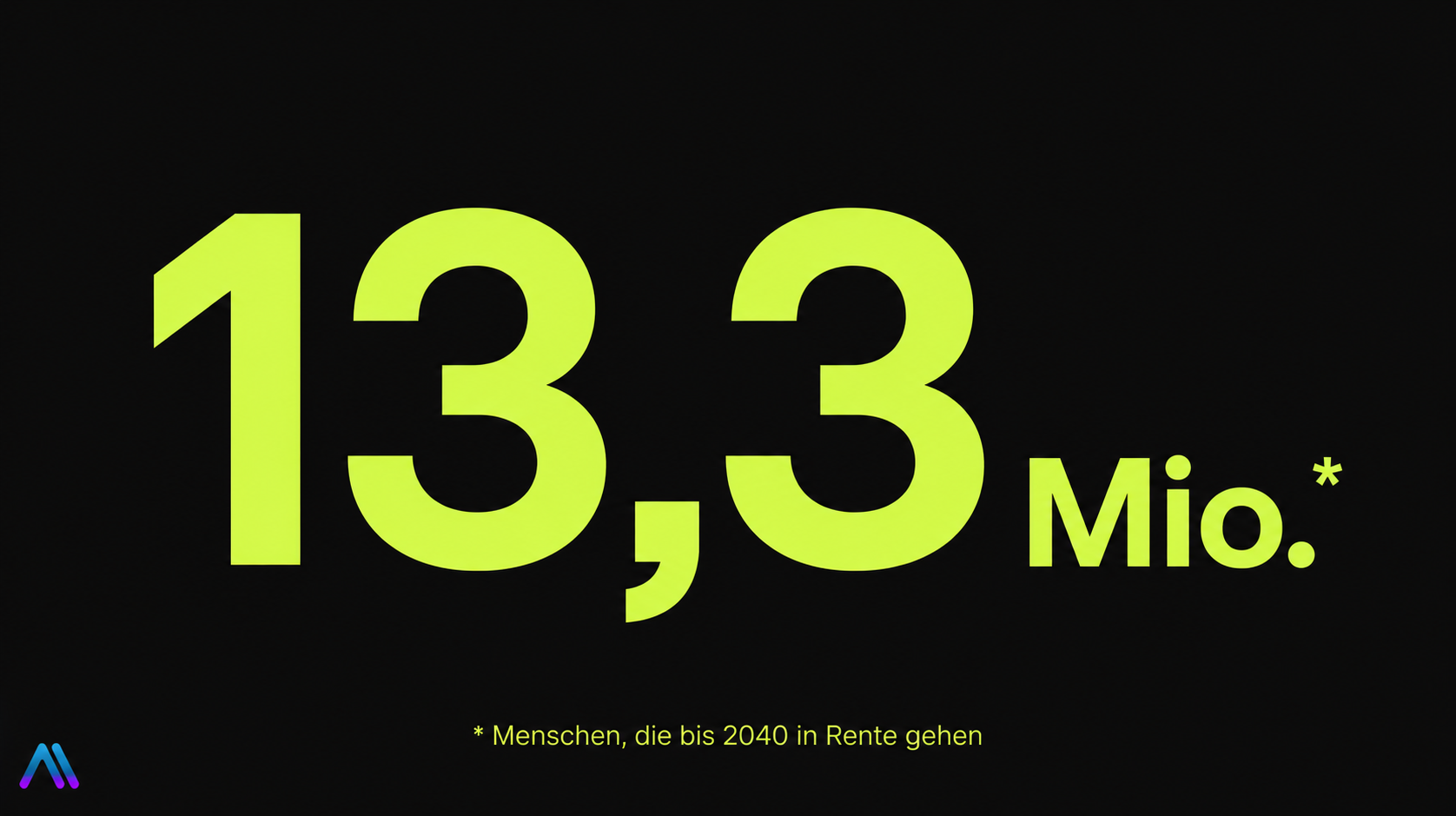
This knowledge isn’t found in any manual. It’s in the minds of your most experienced colleagues, and it’s precisely these so-called baby boomers (born between 1946 and 1964) who—over the next 15 years—will see 13.3 million people retire. According to the Federal Statistical Office, that amounts to roughly 30 percent of all people currently in the workforce in Germany by 2040.
This raises the question of exactly how to retain their valuable expertise within the company. In this article, we’ll explore answers together and reveal how a new AI feature called“Record a Skill” can help you do just that. Are you ready? Then let’s get started!
What exactly is a skill?
A skill is essentially a stored capability: in other words, a set of instructions that an AI or agent learns once and can then retrieve repeatedly with the same level of quality , without you having to explain everything to it all over again each time. For example, how travel expense reports work in your company: which receipts are required, who approves them, and at what amount a second review is necessary.
This is important because, without such a skill, an AI might solve a recurring task slightly differently each time, depending on how you phrase it. With a saved skill, however, the same task is reliably performed the same way every time. This is exactly what leads to consistently high quality, regardless of who is using the AI at the moment.
What "Record a Skill" Actually Means
Until now, you’ve either used text to explain to an AI how a skill should work, or you’ve let it figure it out on its own based on data. That’s exactly what’s changing now. With “Record a Skill,” you simply record your screen, perform a task as you normally would, and explain aloud what you’re paying attention to as you go. The AI analyzes not only the sequence of your clicks and inputs but also your spoken commentary, and uses this to determine where you make decisions and why. Afterward, it can take over this task on its own in the future.
"Record a Skill" is essentially "what you see is what you get," and that’s a huge relief because it’s much easier to demonstrate processes than to describe them—especially for the many employees within an organization.
This approach is by no means a solo effort by a single provider: Both Anthropic, with Claude, and OpenAI, with Codex, are following this trend. At OpenAI, the comparable feature is called “Record and Replay,” though it is not yet available in the EU. The provider Loom is also following suit with its own feature.
Three providers in quick succession are demonstrating that AI is apparently no longer meant to learn solely from text, but also by watching.
Experiential knowledge becomes standard knowledge
Once a task has been recorded, it runs the same way every time afterward, regardless of who was originally able to do it or who is currently on vacation. What used to depend on chance—who happened to be there and how well he or she had been trained—becomes a reliable process. The fact is: Quality improves.
Why this is becoming important right now of all times
This wave of retirements isn’t some abstract future scenario—it’s already happening. For your company, this likely means that the very colleagues who’ve been with the company the longest and know the most will be retiring in the coming years. And with them goes knowledge that was never written down. When these people leave the company, it’s not just a loss of manpower. It’s the loss of someone who simply knows how things are done.
Anecdote: When Knowledge Has a Name
A very well-known kitchen manufacturer faces exactly this problem. They have a single employee who selects the perfect wood veneers—in other words, decides which trees will be used for their high-end kitchens and which won’t. No set of rules, just a great deal of good intuition.
Internally, they call this colleague“Mr. Holz.” And the company has long realized that if Mr. Holz leaves, they’ll have a massive problem.
Why Discussions and Documentation Are of Little Help in This Context
Many companies have been trying to get a handle on this for a long time, usually through interviews or written documentation. Both are only of limited help.
Interviews aren't very helpful because even experienced employees often can't explain exactly why they do things the way they do. It's a gut feeling, not a hard-and-fast rule that can simply be written down.
Documentation is only of limited help , for two reasons. First , it’s almost never up to date; processes change faster than anyone can find the time to rewrite them. Second, it usually only includes the obvious. The actual reasoning behind why someone decides one way rather than another in a case of doubt is almost always missing.
That is exactly why “Record a Skill” is so interesting. When someone demonstrates a task and explains it aloud, more of that experiential knowledge comes through automatically than during an interview or in a documentary. A related approach currently being discussed is what’s known as “skill inference”: Here, an AI analyzes the digital traces someone leaves behind anyway—such as in emails or documents—to indirectly deduce decision-making patterns. “Record a Skill” eliminates the need for this roundabout approach because the knowledge is generated directly as the skill is demonstrated.
A principle that even researchers are exploring
Behind this lies what researchers call the Hayek problem, named after the economist Friedrich Hayek. In short: Knowledge within a company isn’t concentrated in one central location. It’s distributed among many individual people, such as Mr. Holz or your most experienced colleagues.
Ethan Mollick, a researcher at the Wharton School, recently put it this way: Curing cancer is probably easier than completely replacing a large consulting firm like Accenture with AI. At first glance, this is surprising because consulting is purely intellectual work—essentially AI’s forte.
The difference, however, lies precisely in the “Hayek problem”: With cancer, there is clear, clean data—millions of patient records and studies—that a model can use for calculations. A company, on the other hand, is not a clean database. Its knowledge is embedded in thousands of individual decisions and lessons learned that have never been centrally collected, and that is exactly what no model can simply calculate, no matter how powerful it is.
For you, this means: The real limit for AI isn’t the intelligence of a model, but rather what your company actually makes visible. That’s exactly why it’s worth making knowledge like Mr. Holz’s accessible before you can even ask what an AI could take over.
Here's what you can do right now
A good first step is small and specific. Take a look around your own company: Where does a lot of the workload depend on a single person? Where does it take a particularly long time to train new employees? Where does things get tight as soon as someone is sick or on vacation?
And here's a little insight from Leaders of AI
Here at LOAI’s Content Marketing team, one such task would be researching topics and sources, for example. In other words, how to decide whether a source is reliable enough, when it’s better to keep looking rather than simply accepting a figure at face value, and how to handle conflicting information. This decision-making logic isn’t written down anywhere—it varies from case to case—and it would be difficult, for example, to list every single detail in an interview.
Conclusion
The baby boomers are leaving. That’s common knowledge. What receives less attention is what’s leaving with them: not just the workforce, but a wealth of experience that has never been fully documented.
"Record a Skill" doesn't solve this problem overnight. But it shows where things are headed: away from tedious descriptions and toward simply demonstrating how to do something.
The most important question for you, therefore , is no longer just: What tasks can AI take over? But rather: What knowledge should you document before it leaves your company along with an employee?
If you want to answer this question for yourself, there’s no getting around implementing a structured AI rollout within your own company. You’ll find two suitable programs for this at Leaders of AI. In the “AI Integration Expert” program, you’ll learn, step by step, how to integrate AI agents into your daily work.
In theMaster Business with AI MBAI®)” program, which offers a university certificate from Fresenius University of Applied Sciences, you’ll learn how to strategically leverage AI across your entire organization.
Sources
- BornCity: “Record a Skill” – Claude Learns Work Steps by Watching
- BornCity: Claude “Record a Skill” – Screen Recordings Become Automation
- Search Engine Journal: Anthropic's Claude Can Now Watch a Video and Learn Your Job
- Federal Statistical Office: Press Release on the Labor Force and Retirement
- University of Passau: Study — How Artificial Intelligence Can Lead to a Loss of Knowledge in Companies
- Ethan Mollick on X, as reported by Blockchain.News: OpenAI Debate Highlights 2035 White-Collar Risk